
The short answer
Compare the walls with your ingoing condition report first. NSW Fair Trading lists “faded, chipped or cracked paint” and paint worn off near a light switch as fair wear and tear, but an “unapproved, poor quality paint job” and paint pulled off by Blu-Tack or tape as damage. Clean marks before painting them. Where you do touch up, match the colour and the sheen, test in a hidden spot, and if the patch still shows, paint the whole wall from corner to corner.
Fair wear and tear, or damage?
NSW Fair Trading says a tenant must leave the property “as near as possible to the same condition” as when they moved in, and that fair wear and tear is not something tenants have to pay to repair. Its list is a useful checklist for walls:
- Fair wear and tear: faded, chipped or cracked paint; paint worn off the wall near a light switch.
- Damage: an unapproved, poor quality paint job; damage to paint caused by removing posters stuck with Blu-Tack or sticky tape.
Your ingoing condition report is the evidence. Marks noted when you moved in are not yours to fix. Take dated photos of each wall before and after any touch-ups.
Clean before you paint
Scuffs from furniture, shoes and hands often wash off. Try warm water with a little detergent and a soft cloth, working gently so you do not polish a shiny patch into a flat paint. Painting over a dirty or greasy mark also tends to show through.
Holes from picture hooks are a separate question. NSW lists “installing or replacing hooks, nails or screws for hanging paintings, picture frames and other similar items” as a minor change a landlord cannot unreasonably refuse, but check your lease and any written agreement about whether hooks are to be left or removed and filled. Filling and sanding is covered in the hole in the wall guide.
How to make a touch-up disappear
Ask the agent for the paint brand, colour and sheen; some landlords keep a tin. If nobody knows, Bunnings suggests taking a paint chip from a clean, hidden area that has not faded, at least the size of a 20-cent coin, and having it scanned or matched.
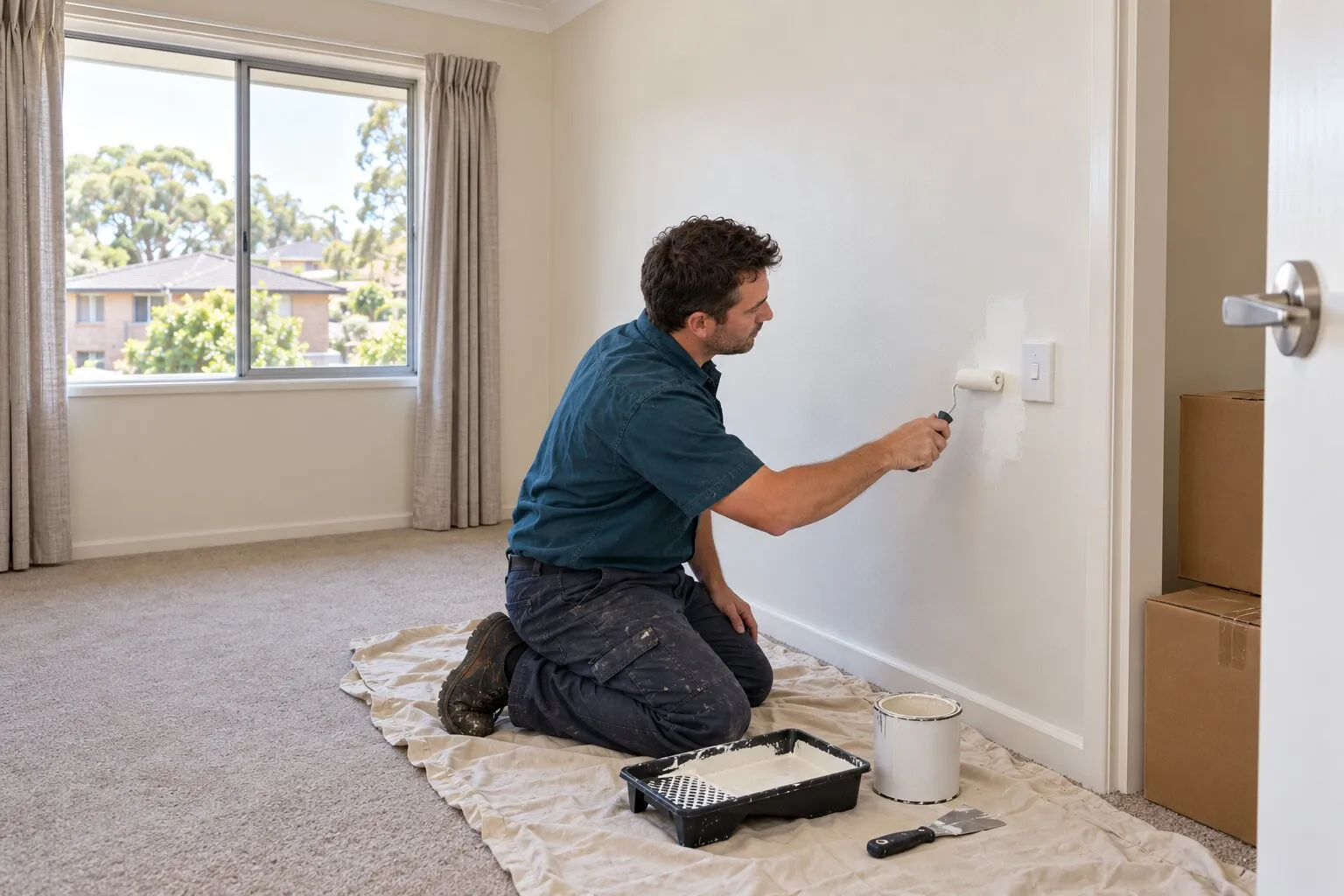
Bunnings also points out that “Matching the paint finish (matt, low sheen or satin) is just as important as matching the colour.” A low sheen touch-up on a matt wall will shine when the light hits it. Use the same tool as the original paint, because brushes and rollers leave different textures, feather the paint slightly beyond the repaired area, and test in a less noticeable spot first, letting it dry fully before judging it.
If the colour variation is still noticeable, Bunnings says repainting the entire wall may give a more consistent finish. Paint to the corners and ceiling line rather than leaving a square patch in the middle of the wall. The room paint calculator works out how much paint a wall or room needs.
Get permission before repainting
Painting is not on the NSW list of minor changes. Making changes generally needs the lease to allow it or the landlord’s written permission. Touching up a mark you caused is a repair; repainting a room, or painting it a different colour, is a change to agree in writing first.
Avoid painting over anything that is not yours to fix. Damp patches, peeling from a leak and recurring cracks need the cause reported to the agent. Painting over them can look like you are hiding a problem.
When to get someone in
A professional touch-up is worth considering when there are several walls, when the paint is a sheen that shows every roller mark, or when you have run out of time before the key handover. Describe the rooms, the number and size of patches, and whether you have the original paint.
Painting is a listed trade category in NSW, and residential work valued over $5,000 including labour, materials and GST needs a contractor licence. Touch-ups sit far below that; a whole-house repaint may not. Use the end-of-lease repairs checklist to list everything before the inspection, and see the handyman cost guide for published price benchmarks.
If there is a bond dispute
If you and the landlord or agent cannot agree on a bond claim, NSW Fair Trading’s bond disputes page explains the steps, including applying to the NSW Civil and Administrative Tribunal. Your condition reports and dated photos are what the decision will rest on, so keep them.
This service covers minor, non-structural work. Residential building jobs are limited to $5,000 in total, including labour, materials and GST. Electrical, plumbing, gas and other specialist trades are outside this service. The limit applies to the whole job; work cannot be split into smaller invoices to avoid licensing. NSW licensing rules.
Questions about this guide
Do I have to repaint the walls when I move out of a NSW rental?
Not because of fair wear and tear. NSW Fair Trading lists faded, chipped or cracked paint as fair wear and tear, which tenants do not have to pay to repair. Damage you caused, such as paint pulled off by tape, is different.
Can a bad touch-up cost me bond?
It can. NSW Fair Trading lists an unapproved, poor quality paint job as damage. Match the colour and sheen, test first, and repaint the whole wall if the patch still shows.
How do I match paint without the original tin?
Take a small paint chip from a clean, unfaded hidden area and have it colour matched, then choose the same sheen. Test it and let it dry before painting the visible area.
Should I fill picture hook holes before moving out?
Check the lease and anything agreed in writing. NSW lets tenants ask to install picture hooks as a minor change; whether they are left or removed at the end is worth confirming with the agent.
Sources and date checked
- NSW Government — fair wear and tear versus damage (modified 21 Sep 2026)
- NSW Government — making changes to a rental property (modified 21 Sep 2026)
- Bunnings — how to colour match paint for a touch-up (no page date)
- NSW Government — categories of building and trade work (modified 22 Sep 2026)
- NSW Government — bond disputes for tenants
Information checked 13 October 2026. Guides explain the source’s published scope; a job needs its own assessment.