
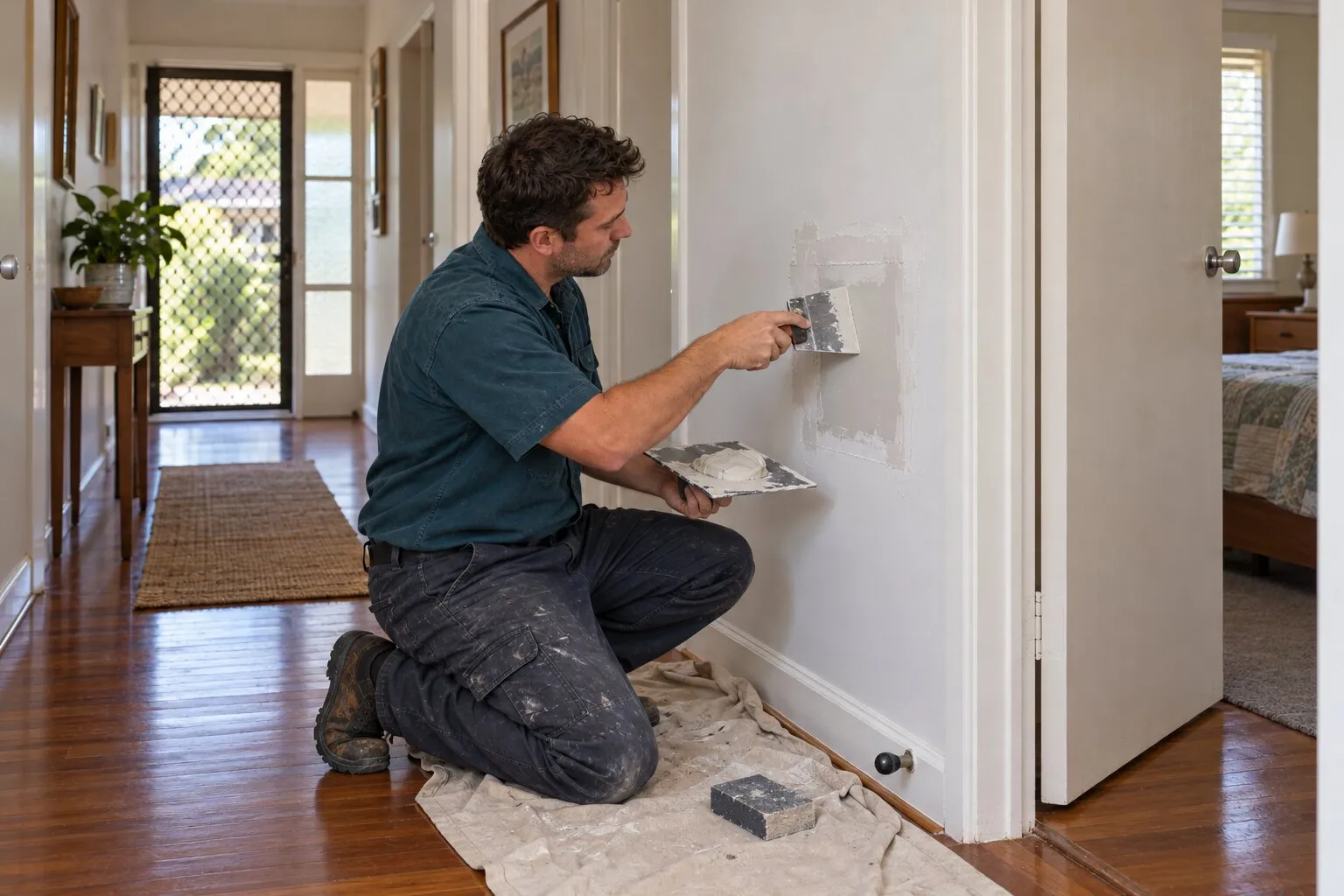
The short answer
Fill screw and picture-hook holes with a ready-mixed filler, then sand, prime and paint. A dent or a hole the size of a door handle needs a patch backed by the board or a timber batten, two or three thin coats of compound and a feathered finish. Before any sanding, cutting or drilling, check what the wall is made of: the NSW Government says a home built before 1990 is likely to contain asbestos. Cracks that keep returning, widen or come with sticking doors need a cause found before anyone patches them.
First, work out what the wall is made of
Knock on the wall and look at the edge of the hole. Plasterboard has a paper face over a gypsum core and sounds hollow between the timber or steel studs. Older houses can have solid rendered brick, fibrous plaster sheets or fibre cement. Each one is repaired differently, so the material matters more than the size of the hole.
Plenty of houses in Bankstown’s older streets were built before 1990. The NSW Government’s asbestos safety page says a home built before 1990 is likely to contain asbestos, and one renovated between 1990 and 2004 may. It lists ceilings, internal walls and eaves among the places asbestos turns up, and says: “Do not sand, scrub, water-blast, cut or drill suspected asbestos.” If you are not sure what a sheet is made of, treat it as asbestos and get it assessed before anyone works on it.
Screw holes, picture hooks and small dents
Small holes are the easy part. Scrape away loose paper and crumbs, press in a ready-mixed filler slightly proud of the surface, let it dry fully, then sand it flat with a fine paper on a block. A second thin coat is normal because filler shrinks as it dries.
Spot-prime the patch before painting. Bare filler soaks up paint differently from the wall around it, and an unprimed patch often shows as a dull square when the light hits it. If the wall paint is old, a touch-up may not match; the paint touch-ups guide explains colour and sheen matching.
Door-handle holes and larger damage
A hole you can fit a fist into needs something solid behind the new piece. The usual method is to cut the damaged area back to a neat square, fix a timber batten or the board’s own backing behind it, screw in a matching piece of plasterboard, then tape and set the joints with base and top coats of compound. Each coat is wider and thinner than the last so the edges disappear.
Before cutting, check for cables and pipes behind the wall. Power points, light switches and plumbing above or below the hole are clues. Do not cut blindly near them, and leave any damaged wiring or pipe to a licensed electrician or plumber.
If a door handle keeps hitting the same spot, fit a door stop after the repair. Otherwise the patch will be back in a few months.
- Small patch kits suit holes up to a few centimetres.
- Larger holes need a new piece of board and taped joints.
- Sand between coats with a light hand; over-sanding scuffs the paper face.
- Prime, then paint the whole panel from corner to corner if the patch still shows.
Cracks in walls: cosmetic or a symptom?
Fine cracks along a plasterboard joint or where the wall meets the cornice are common as a house dries out and moves with the seasons. They can be raked out, filled with a flexible product and painted.
Other cracks are a warning. Diagonal cracks from the corners of doors and windows, cracks you can fit a coin into, cracks that open again after filling, or cracks that appear with doors suddenly sticking can point to movement in the footings or frame. Water stains and bubbling paint usually mean a leak. Filling over any of these hides the evidence. Ask a building inspector or structural engineer about movement, and a licensed plumber or roofer about leaks, before arranging a cosmetic repair.
When to call someone, and what it costs
Call someone when the hole is on a ceiling, when there are several patches to blend, when the wall has a texture you cannot match, or when you are moving out and need a finish that will pass an inspection. In a rental, report the damage to the landlord or agent first and agree who arranges the repair.
Airtasker publishes a national task range for minor wall repairs. It is a task total from its marketplace data, not an hourly rate and not a Bankstown price.
Published minor wall repair guide
| Job or charge | Published guide | Publisher & scope |
|---|---|---|
| Minor wall repairs | $120–$250 / task | AirtaskerNational task category; page last updated 17 June 2026; GST not stated |
AUD figure as published, checked 12 October 2026. A third-party guide, not a quote from this website. Patch size, the number of holes, drying time between coats and painting change the total. Ask for an itemised written quote.
Dry plastering is a listed trade category in NSW. Residential building work valued over $5,000 including labour, materials and GST needs a contractor licence, and the value is for the whole job. A few patches sit well under that; re-sheeting rooms does not. For the limits that apply to small jobs, see what a handyman can do in NSW.
This service covers minor, non-structural work. Residential building jobs are limited to $5,000 in total, including labour, materials and GST. Electrical, plumbing, gas and other specialist trades are outside this service. The limit applies to the whole job; work cannot be split into smaller invoices to avoid licensing. NSW licensing rules.
Questions about this guide
Can I patch plasterboard with just filler?
For screw holes, picture-hook holes and shallow dents, yes. A hole that goes through the board needs a backing piece or a new piece of plasterboard, otherwise the filler cracks or falls through.
How long does a plaster patch take?
The hands-on work is short, but each coat of compound has to dry before sanding and the next coat. A larger patch usually needs more than one visit or a long gap between coats before painting. Check the product’s drying time.
Is it safe to sand a wall in an older house?
Not until you know what the wall is made of. The NSW Government says homes built before 1990 are likely to contain asbestos and advises not to sand, cut or drill suspected asbestos. Get uncertain material assessed first.
Why does my crack keep coming back?
A crack that reopens is usually moving. Cracks from door and window corners, or with doors that start sticking, can indicate movement in the building. Have the cause assessed before filling it again.
Who pays for a hole in a rental wall?
NSW Fair Trading separates fair wear and tear, which a tenant does not have to pay to repair, from damage. It counts paint damage from removing posters stuck with Blu-Tack or tape as damage. Report the hole to the agent, compare it with your condition report and agree the repair in writing.
Sources and date checked
- NSW Government — asbestos safety in the home
- Airtasker — handyman prices (last updated 17 Jun 2026)
- NSW Government — categories of building and trade work (modified 22 Sep 2026)
- NSW Government — fair wear and tear versus damage (modified 21 Sep 2026)
Information checked 13 October 2026. Guides explain the source’s published scope; a job needs its own assessment.