
The short answer
Close the door slowly and watch where it catches. A door that rubs at the top of the latch side has usually dropped on a loose top hinge: tighten or replace those screws first. A door that closes but will not latch usually needs the strike plate moved. Swelling in humid or wet weather can make a door stick for a few weeks; only trim it once the cause is clear, and seal any cut edge. Doors that suddenly stick together with new wall cracks can signal building movement. Airtasker lists $100–$180 as a national task range for fixing doors, handles or hinges.
Find where the door catches
Close the door slowly with the room lights on and look at the gap around it. An even gap all round is what you want. Where the gap closes up, paint has rubbed off or the timber is shiny is where it is catching.
- Rubs at the top corner on the handle side: the door has dropped, usually from a loose top hinge.
- Scrapes the floor: a dropped door, or new flooring or a thicker rug under it.
- Closes but will not latch: the latch and the strike plate on the frame no longer line up.
- Tight all along one edge, worse in wet weather: the timber has taken on moisture, or paint has built up.
- Springs back open: the hinge side is binding, often from hinges set too deep or paint in the hinge.
Sagging doors: fix the hinges first
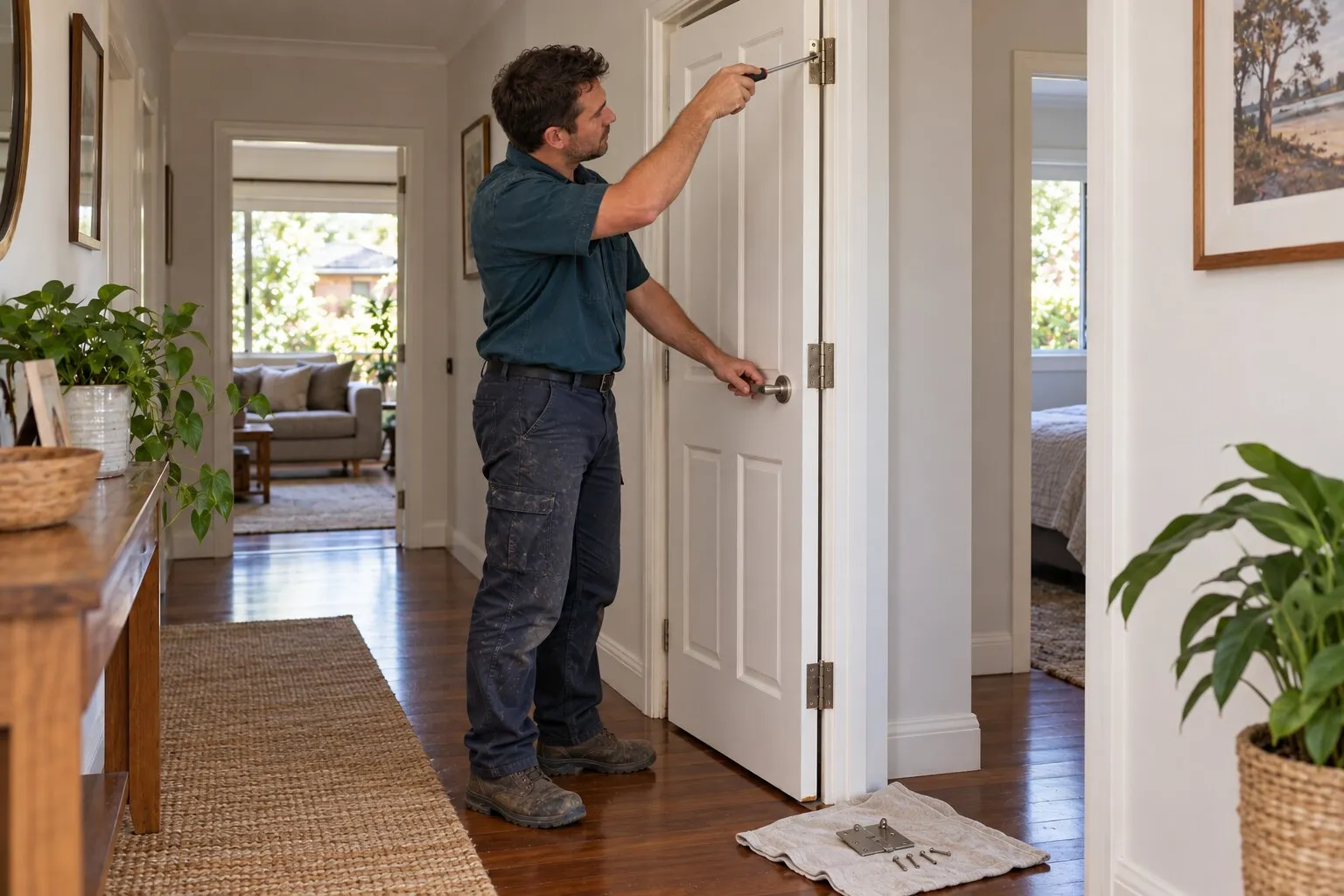
Open the door and lift the handle end gently. If the top hinge moves, that is the problem. Tighten the screws in both the door and the frame. If a screw keeps spinning, the hole is stripped: a longer screw that reaches through the jamb into the framing timber behind, or a hole packed with glued timber slivers and re-drilled, gives it something to bite into.
Replace a hinge that is bent or worn at the knuckle with one of the same size so the screw holes and recess still match. Take the old one to the hardware store.
Doors that will not latch
Rub a little pencil or lipstick on the latch tongue, close the door and see where it marks the frame. If the mark is above or below the hole in the strike plate, the plate needs moving or its opening needs filing a few millimetres. If the latch reaches the plate but does not spring in, the door may be too far from the stop, or the latch itself is sticking.
Handles that are loose or floppy usually have loose fixing screws or a worn spring. When replacing a handle or latch, measure the backset (the distance from the edge of the door to the centre of the handle) and buy a set to match, so the new latch fits the existing hole.
Front-door deadlocks and keyed security hardware are a different job. Lock and security work is not a minor door repair, so leave it to a locksmith.
Aluminium sliding doors stick for different reasons, usually a dirty track or worn rollers. See the sliding door roller guide.
Swelling, humidity and trimming
Timber doors take on moisture in humid Sydney summers and wet spells, and a door that sticks for a few weeks may free itself as the weather dries. Bathroom and laundry doors are most affected. Planing a door in the wettest week of the year can leave a gap once it dries.
If a door does need trimming, take off only what is needed and seal the cut edge with primer or paint. Bare timber at the top or bottom edge will keep soaking up moisture. A door that sticks only after new flooring needs trimming at the bottom, allowing for the floor covering.
When it is not a door problem
If several doors start sticking at once, or a door sticks together with new cracks running from the corners of the door frame, the frame may be moving. That can point to movement in the footings or structure and needs a building inspector or structural engineer, not a plane. Our hole in the wall guide covers which wall cracks are warning signs.
Fire-rated doors, such as the entry door of many apartments, are part of the building’s fire safety system. Do not trim, re-hang or change the hardware on one yourself; ask the strata manager. If you rent, report a door that will not close or lock to the agent; the urgent repair checker shows which faults count as urgent in NSW.
What a door repair costs
Airtasker publishes a national task range for small door work. It is a task total, not an hourly rate, and replacement hardware may be extra.
Published door repair guide
| Job or charge | Published guide | Publisher & scope |
|---|---|---|
| Fixing doors, handles or hinges | $100–$180 / task | AirtaskerNational task category; page last updated 17 June 2026; GST not stated |
AUD figure as published, checked 12 October 2026. A third-party guide, not a quote from this website or a Bankstown average. The number of doors, parts and whether trimming and painting are needed change the total.
For a quote, list each door, what it does when you close it, and any handles or hinges you already have. Cupboard doors and drawer runners can go on the same list; the cupboard hinge guide covers adjusting and replacing concealed hinges.
This service covers minor, non-structural work. Residential building jobs are limited to $5,000 in total, including labour, materials and GST. Electrical, plumbing, gas and other specialist trades are outside this service. The limit applies to the whole job; work cannot be split into smaller invoices to avoid licensing. NSW licensing rules.
Questions about this guide
Why has my door suddenly started sticking?
The most common causes are a loose top hinge, swelling in humid or wet weather and new flooring. If several doors stick at once or new cracks appear around door frames, have the building checked for movement.
How do I fix a door that won’t latch?
Mark the latch tongue with pencil, close the door and see where it hits the frame. Move the strike plate or enlarge its opening slightly so the latch lines up.
Should I plane a sticking door?
Only once you know why it sticks. Tighten the hinges first, and avoid planing during a wet spell. Seal any trimmed edge with primer or paint.
Can I replace a door handle myself?
On an ordinary internal door, usually yes. Measure the backset and the door thickness and buy a matching set. Keyed front-door locks are a job for a locksmith.
How much does it cost to fix a door?
Airtasker lists $100–$180 per task nationally for fixing doors, handles or hinges (page last updated 17 June 2026, GST not stated). Parts and trimming can add to that.
Sources and date checked
- Airtasker — handyman prices (last updated 17 Jun 2026)
- NSW Government — getting repairs done in a rental
- NSW Government — categories of building and trade work (modified 22 Sep 2026)
Information checked 13 October 2026. Guides explain the source’s published scope; a job needs its own assessment.