
The short answer
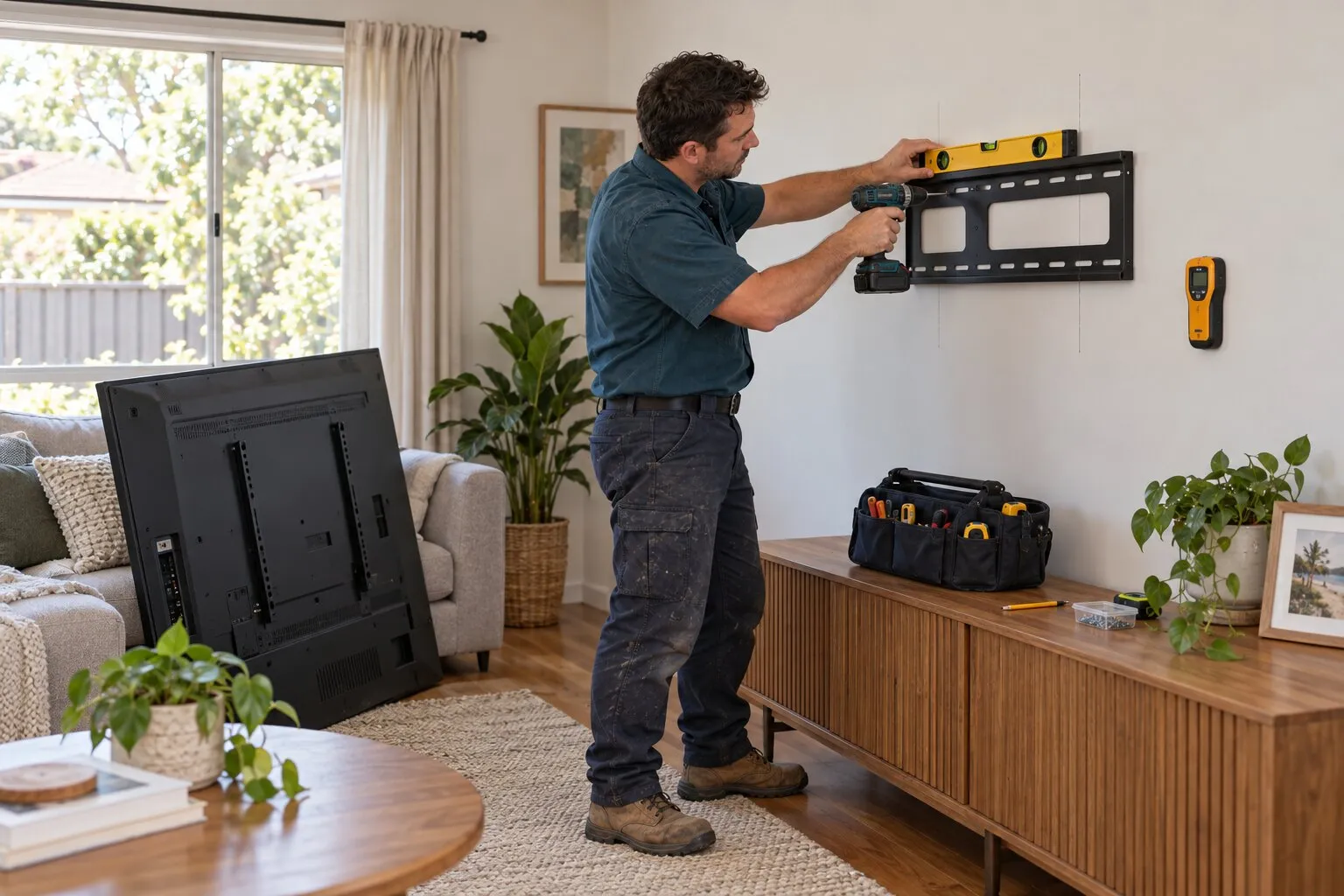
On a plasterboard wall, a TV bracket should be screwed into the timber or steel studs behind the sheet, not into the plasterboard alone. On brick, it is fixed with masonry anchors drilled into solid brick rather than the mortar joints. Use a bracket rated above the TV’s weight and follow its instructions. Running cables inside the wall or adding a power point behind the TV is electrical wiring work, which needs a licensed electrician in NSW. Airtasker lists $150–$300 as a national task range for TV mounting.
Plasterboard walls: find the studs
Most internal walls in newer homes and extensions are plasterboard over a timber or steel frame. The sheet itself is not designed to carry a TV. The bracket needs to be fixed through the board into the studs, which are usually spaced at regular intervals; a stud finder and a few test holes behind where the TV will sit confirm where they are.
If the studs do not line up with where you want the screen, a bracket with a wider wall plate or a horizontal timber backing fixed across two studs can solve it. Cavity anchors made for plasterboard are fine for light pictures and small shelves, but check their rated load and the bracket maker’s instructions before trusting them with a television.
Brick, double brick and rendered walls
Many older houses around Bankstown have brick walls, and some internal walls are solid double brick under render or plaster. These take a masonry drill bit and anchors sized for the bracket. Drill into the brick itself rather than the mortar joints, which are softer and can crumble.
Hollow or cored bricks need anchors suited to them. Old render can sound drummy and come away when drilled; if it does, the fixing has to reach the solid brick behind. The same applies to hanging heavy pictures and mirrors on brick: the right plug and screw for the load, or a picture rail where one exists. The heavy mirror guide covers wall anchor ratings and fibro walls.
Fibro and older sheeting: check before you drill
Fibre cement sheet, often called fibro, was common in Sydney houses for decades. The NSW Government says a home built before 1990 is likely to contain asbestos and advises: “Do not sand, scrub, water-blast, cut or drill suspected asbestos.” If the wall might be fibro, have the material identified before anyone drills it, or choose a different wall.
Cables and power points: where the job changes trade
Hiding the TV cables is where many mounting jobs cross into electrical work. NSW defines electrical wiring work as installing, repairing, altering, removing or adding to an electrical installation, and says you need an electrical licence or certificate before doing any of it. Moving or adding a power point behind the screen, or running mains cables through the wall, is a job for a licensed electrician.
Plug-in leads that run from an existing power point can be tidied with a surface-mounted cable cover, which does not touch the electrical installation. Plan the cable route before the bracket goes up, because the screen position often decides whether you need an electrician at all.
If the TV stays on a stand, anchor it
Product Safety Australia says toppling furniture has killed at least 28 people in Australia since 2000 and causes nearly 20 injuries every week. It advises considering wall-mounting the TV, notes that most TVs come with anchor straps, and says that if you secure the TV to a piece of furniture, the furniture should be secured to the wall too.
In a NSW rental, “securing furniture to a wall (other than a tiled wall) if needed for the safe use of the furniture” is one of the minor changes a landlord cannot unreasonably refuse. A TV bracket is not on that list, so get written permission before drilling for one.
Published TV mounting prices
Airtasker publishes national task ranges from its marketplace data. They are task totals, not hourly rates, and the bracket is not necessarily included.
Published TV and picture mounting guide
| Job or charge | Published guide | Publisher & scope |
|---|---|---|
| TV mounting | $150–$300 / task | AirtaskerNational task category; page last updated 17 June 2026; GST not stated |
| Hanging pictures or mirrors | $80–$150 / task | AirtaskerNational task category; page last updated 17 June 2026; GST not stated |
AUD figures as published, checked 12 October 2026. Third-party guides, not quotes from this website or a Bankstown average. Screen size, wall type, bracket type and cable work change the total. Electrical work is priced separately by a licensed electrician.
When you describe the job, include the TV’s size and weight, the bracket model, the wall type and the height you want. See what a handyman can do in NSW for the licensing limits on small jobs.
This service covers minor, non-structural work. Residential building jobs are limited to $5,000 in total, including labour, materials and GST. Electrical, plumbing, gas and other specialist trades are outside this service. The limit applies to the whole job; work cannot be split into smaller invoices to avoid licensing. NSW licensing rules.
Questions about this guide
Can you mount a TV on plasterboard without studs?
Plasterboard alone is not a reliable support for a TV. Fix the bracket into the studs, or into timber backing that spans studs. Some cavity anchors carry light loads, but check their rating and the bracket instructions.
Can a handyman hide TV cables in the wall?
Moving or adding power points and running mains wiring is electrical wiring work, which needs a licensed electrician in NSW. Plug-in leads can be tidied with surface cable covers.
How do you hang pictures on a brick wall?
Drill into the brick with a masonry bit and use a plug and screw suited to the weight. Avoid the mortar joints, and check whether the wall is render over brick or something else first.
How much does TV wall mounting cost?
Airtasker lists $150–$300 per task nationally for TV mounting (page last updated 17 June 2026, GST not stated). Your price depends on the wall, bracket and any electrical work.
Can I mount a TV in a rental?
Get the landlord’s written permission first. A TV bracket is not on the NSW list of minor changes, although securing furniture to a non-tiled wall for safety is.
Sources and date checked
- Airtasker — handyman prices (last updated 17 Jun 2026)
- NSW Government — electrical work licences (updated 23 Jun 2026)
- Product Safety Australia — toppling furniture and TVs (25 Sep 2026)
- NSW Government — asbestos safety in the home
- NSW Government — making changes to a rental property (modified 21 Sep 2026)
Information checked 13 October 2026. Guides explain the source’s published scope; a job needs its own assessment.